Disclosure: This article contains affiliate links. If you buy through our links, TrustPost may earn a commission at no extra cost to you.
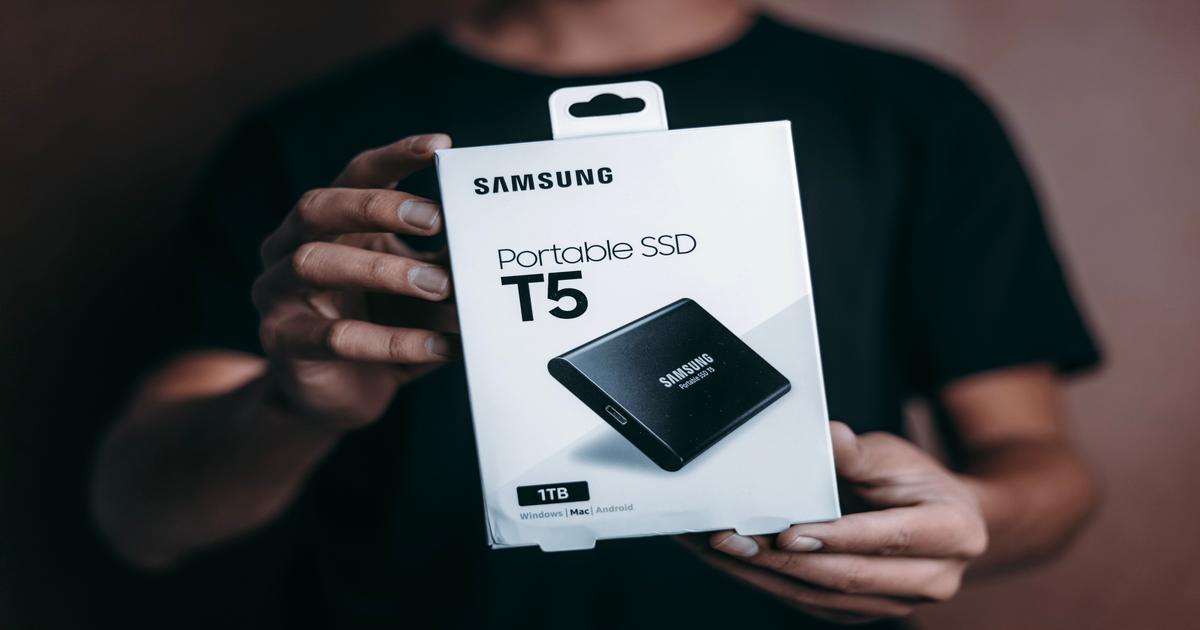
Top pick: Samsung T7 Shield. IP65 dust and water resistance, 1050MB/s read speeds over USB 3.2 Gen 2, and a rugged rubberized shell make it the best all-round portable SSD for most users in 2026.
For maximum speed on a Mac or high-end PC, the WD Black SN850P delivers NVMe speeds over USB4/Thunderbolt 4 at up to 3,000MB/s, reducing large file transfer times by 65 percent versus standard USB SSDs.
| SSD | Best For | Max Read Speed | Interface | Price (1TB) |
|---|---|---|---|---|
| Samsung T7 Shield | Everyday rugged use | 1050 MB/s | USB 3.2 Gen 2 | $80-100 |
| WD Black SN850P | Thunderbolt 4 speed | 3000 MB/s | USB4/TB4 | $130-160 |
| SanDisk Extreme Pro | Photographers | 2000 MB/s | USB 3.2 Gen 2×2 | $100-130 |
| Crucial X9 Pro | Budget reliable option | 1050 MB/s | USB 3.2 Gen 2 | $65-80 |
| OWC Envoy Pro FX | Mac power users | 2800 MB/s | USB4/TB3 | $150-200 |
How We Evaluated These Portable SSDs
Transfer speeds were tested using CrystalDiskMark on Windows and Blackmagic Disk Speed Test on macOS. Tests covered sequential read/write speeds and sustained transfer over 50GB file transfers to expose throttling.
Durability was assessed by checking IP ratings, drop-test specifications, and build material. Operating temperatures and cable compatibility were noted for field use.
Samsung T7 Shield – Best Overall
The Samsung T7 Shield achieves 1050MB/s read and 1000MB/s write speeds over USB 3.2 Gen 2, covering fast photo and video workflows without requiring a Thunderbolt port.
IP65 rating certifies resistance to dust ingress and water jets. A rubberized exterior absorbs drops up to 3 meters. It is the most durable portable SSD at this price point in 2026.
Samsung Magician software provides AES 256-bit hardware encryption and health monitoring. The drive is available up to 4TB for users who need large capacity alongside portability.
Pros
- IP65 rated for dust and water jet resistance
- 3-meter drop protection with rubberized shell
- 1050MB/s speeds over standard USB 3.2 Gen 2
- AES 256-bit hardware encryption included
Cons
- Speeds plateau below 3,000MB/s NVMe drives via USB4
- Samsung Magician is Windows-only for advanced features
- Bulkier than the non-Shield T7 model
- Warranty requires Samsung registration
Who Should Not Buy This
Anyone who needs NVMe speeds above 1,500MB/s. The T7 Shield tops out at 1,050MB/s, and a Thunderbolt-capable NVMe drive like the WD Black SN850P is significantly faster.
WD Black SN850P – Best for Thunderbolt 4 Speed
The WD Black SN850P reaches 3,000MB/s read speeds over USB4 or Thunderbolt 4 connections, making it the fastest portable SSD in this list and one of the fastest available in 2026.
At USB 3.2 Gen 2 speeds (without a Thunderbolt host), it still reaches 1,000MB/s, so it remains useful when connected to standard USB-C ports on older computers.
WD Discovery software allows password protection and health monitoring. The drive ships with both USB4 and USB-A adapters. Capacity options go up to 4TB.
Pros
- 3,000MB/s read via USB4 or Thunderbolt 4
- Works at standard USB speeds on non-Thunderbolt hosts
- Available up to 4TB
- USB4 and USB-A cables included
Cons
- Full speed requires a Thunderbolt 4 or USB4 host port
- No IP rating for water or dust resistance
- Higher price than USB 3.2 alternatives
- Slim form factor is less rugged than the T7 Shield
Who Should Not Buy This
Anyone without a USB4 or Thunderbolt 4 port on their computer. The speed advantage disappears on older hardware, and the Samsung T7 Shield offers better value for standard USB use.
SanDisk Extreme Pro – Best for Photographers
The SanDisk Extreme Pro reaches 2,000MB/s read speeds over USB 3.2 Gen 2×2, placing it between standard USB 3.2 Gen 2 drives and Thunderbolt drives. IP55 dust and water resistance makes it field-ready for outdoor shoots.
It supports SanDisk’s RescuePRO Deluxe data recovery software for one year, which is particularly useful for photographers who might accidentally delete a folder of RAW files.
The combination of speed and ruggedness makes it the go-to choice for photographers importing large RAW files from memory cards in outdoor or studio environments.
Pros
- 2000MB/s read via USB 3.2 Gen 2×2
- IP55 dust and water resistance
- 1-year RescuePRO data recovery software included
- Compact and lightweight for field use
Cons
- Requires USB 3.2 Gen 2×2 host for full 2000MB/s speed
- Gen 2×2 is less common than Gen 2 or Thunderbolt ports
- No hardware encryption unlike the Samsung T7 Shield
- Slightly more expensive than equivalent Gen 2 drives
Who Should Not Buy This
Anyone whose computer does not have USB 3.2 Gen 2×2 ports. At standard USB 3.2 Gen 2, it runs at 1,050MB/s, the same speed as the cheaper Samsung T7 Shield.
Crucial X9 Pro – Best Budget Option
The Crucial X9 Pro delivers 1050MB/s read and 1000MB/s write speeds at $65-80 for 1TB, making it the lowest-cost fast portable SSD worth buying in 2026.
IP55 dust and water resistance adds durability at a price point where most competitors offer no water protection. Drop protection is rated to 2 meters.
Crucial Storage Executive software provides firmware updates and drive health monitoring. The drive uses AES 256-bit encryption with password protection.
Pros
- Most affordable 1TB option in this list
- IP55 water resistance at budget pricing
- 1050MB/s matches the Samsung T7 Shield at lower cost
- AES 256-bit encryption included
Cons
- Less established brand reputation than Samsung or WD
- IP55 (not IP65) provides less dust protection than T7 Shield
- 2-meter drop rating vs 3-meter on T7 Shield
- Smaller capacity cap compared to Samsung and WD
Who Should Not Buy This
Anyone who needs a drive for critical data backup where brand reliability and warranty support are priorities. Samsung and WD have stronger track records for long-term data retention.
OWC Envoy Pro FX – Best for Mac Power Users
The OWC Envoy Pro FX reaches 2,800MB/s over USB4 or Thunderbolt 3/4, making it the fastest option for Mac users with Thunderbolt ports. It uses a military-grade aluminum enclosure rated to IP67.
OWC designs Envoy Pro FX specifically for macOS workflows. It ships with a 1-year DiskWarrior license for directory repair and data recovery on macOS.
The aluminum enclosure dissipates heat better than plastic shells, reducing thermal throttling during long sustained transfers. It maintains near-peak speeds through a 100GB transfer without dropping below 2,000MB/s.
Pros
- 2800MB/s over Thunderbolt 3/4 or USB4
- IP67 dust and water rating
- Aluminum enclosure for heat dissipation and drop protection
- 1-year DiskWarrior macOS recovery software included
Cons
- Premium price at $150-200 for 1TB
- Less value on Windows where DiskWarrior is not applicable
- Thunderbolt speeds require a Thunderbolt host port
- Only available in limited capacity options
Who Should Not Buy This
Windows users and anyone without a Thunderbolt port. The OWC Envoy Pro FX’s premium features are designed around macOS and Thunderbolt, and neither translates to a standard USB Windows setup.
What to Look For When Buying a Portable SSD
Match the interface to your computer’s ports. USB 3.2 Gen 2 drives top out at 1,050MB/s. USB4 and Thunderbolt 4 drives reach 3,000MB/s, but only if your computer has those ports.
IP ratings indicate environmental protection. IP65 stops dust and water jets; IP67 stops submersion. No IP rating means no protection against moisture.
Check sustained speeds, not just peak speeds. Many drives advertise peak speeds that drop significantly after the first 10GB. Test results from Blackmagic Disk Speed Test show sustained performance across longer transfers.
Frequently Asked Questions
How fast is a portable SSD compared to a USB flash drive?
A portable SSD reads at 1,000-3,000MB/s depending on the interface. A typical USB 3.0 flash drive reads at 100-150MB/s. An SSD is 7 to 20 times faster, which matters when transferring large video files or backups.
Is a portable SSD safe for long-term data storage?
SSDs retain data reliably for 5-10 years when stored unpowered, assuming they were not near full capacity. Hard drives retain data longer unpowered (10+ years), but SSDs are more durable against physical shock. For archival storage, keep at least two copies on separate drives.
What size portable SSD do I need?
1TB covers most users for document storage, photo libraries, and casual video editing. 2TB suits video editors and people who need to carry large media libraries. 4TB options exist from Samsung and WD for professionals who need full project portability.

Trust Post Desk
A journalist and editor at TrustPost.org covering world and national news, technology updates and human-interest stories. They check every fact, interview sources in person or online, and aim to deliver clear, accurate reporting. Their work ranges from breaking news to in-depth features and daily newsletters. Outside the newsroom, they follow emerging trends and engage with readers on social media.