Mobile gaming crossed the $100 billion revenue threshold for the first time in 2025, and heading into mid-2026 the industry is navigating a new phase defined by slower growth, tighter regulation, and intensifying competition between platforms.
Global mobile gaming revenue reached $103.5 billion in 2025, according to Newzoo’s Global Games Market Report, with Asia-Pacific accounting for roughly 56 percent of that total.
In 2026, analysts expect growth to continue at a more measured pace of 5 to 7 percent annually, down from the double-digit rates seen during 2019 to 2021, as smartphone penetration matures in core markets and player acquisition costs rise.
What Is Driving Revenue in 2026
The fastest-growing mobile gaming markets in 2026 are concentrated in regions where smartphone adoption is still expanding rapidly, including Southeast Asia, the Middle East, and sub-Saharan Africa.
Saudi Arabia and the UAE have emerged as significant gaming markets this year, backed by government-led investment under Vision 2030 and growing youth populations with high mobile internet usage rates.
Indonesia surpassed Taiwan in 2025 to become Asia’s fourth-largest mobile gaming market. In 2026, it is on track to grow further as 5G rollout expands coverage beyond major urban centers.
Brazil remains the largest mobile gaming market in Latin America and is expected to reach $3.2 billion in 2026, driven by continued growth in battle royale titles and increasing investment from local studios in culturally specific game content.
The Biggest Games Competing for Players Right Now
Honor of Kings, Tencent’s dominant MOBA title, held the top-grossing position globally through the first half of 2026, according to Sensor Tower’s mobile market data.
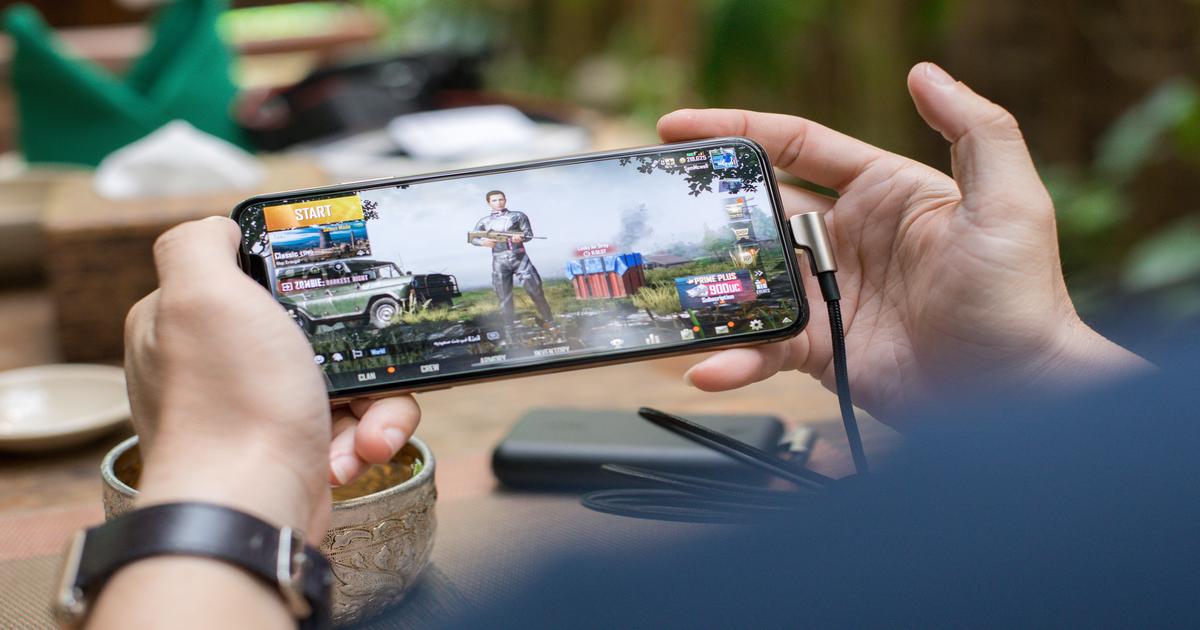
PUBG Mobile continues to rank among the top five highest-earning titles globally, supported by consistent seasonal updates, crossover events with film and music brands, and a dedicated competitive circuit across Asia, the Middle East, and Europe.
Royal Match, from Turkish developer Dream Games, has maintained over $1 billion in annual revenue for two consecutive years, cementing Dream Games as one of the few independent studios capable of competing at the top of the revenue charts without a major publisher parent.
Supercell’s Clash of Clans and Clash Royale remain in the top ten globally despite being over a decade old, a rare achievement that reflects the long-term value of strong community ecosystems and live operations strategies.
Regulation Is Reshaping the Market in 2026
App store regulation is one of the most consequential issues facing mobile gaming developers and publishers in 2026. Apple and Google both face ongoing antitrust proceedings in the EU, US, Japan, and South Korea over commission structures and payment restrictions.
The EU’s Digital Markets Act, which took effect in 2024, requires Apple to allow alternative app stores on iOS devices in Europe. Several gaming publishers have begun distributing titles through alternative channels, though consumer adoption remains early-stage.
Loot box regulation is expanding. Belgium and the Netherlands have maintained bans or restrictions on randomised reward mechanics since 2018, and similar legislation is advancing in Germany, Austria, and Spain in 2026.
Children’s data and playtime restrictions have tightened in China, where the National Press and Publication Administration requires identity verification for all players and limits users under 18 to three hours of gaming per week.
Companies operating in Europe should be aware that data collection practices in mobile games face the same GDPR scrutiny as any other platform. Our coverage of record data privacy fines reaching $4.5 billion in 2025 explains the specific risks around consent, tracking, and children’s data that apply directly to gaming apps.
AI Is Entering Game Development Pipelines
AI tools are now actively used in mobile game development for asset generation, dialogue localization, playtesting automation, and dynamic difficulty adjustment.
Several mid-sized studios disclosed in 2025 and early 2026 that AI-assisted localization had cut translation costs by 40 to 60 percent while expanding their games into languages that would previously have been too expensive to support.
Procedural content generation, powered by AI models, is being used in idle games and open-world mobile titles to extend content libraries without proportional increases in development headcount.
Studios deploying these tools in Europe need to be aware of how the EU AI Act’s enforcement framework applies to automated decision-making in consumer products, including games that use AI to adjust pricing, difficulty, or content recommendations.
Streaming Platforms Are Building Gaming Portfolios
Netflix Games has expanded to over 100 titles available to subscribers at no additional cost as of mid-2026, focusing on mobile-first games tied to its original content brands including Stranger Things, Squid Game, and Wednesday.
Apple Arcade reached an estimated 30 million subscribers in 2025 and continues to offer curated premium mobile games as part of the Apple One bundle. The service avoids in-app purchases entirely, positioning it as an alternative to the dominant free-to-play model.
The convergence of streaming and gaming is accelerating. Our report on streaming service consolidation in 2026 covers how Netflix, Apple, and Amazon are each integrating games into their subscription ecosystems as a tool for reducing subscriber churn.
What the Rest of 2026 Looks Like
The second half of 2026 will be shaped by how app store regulation develops in Europe and the United States. A ruling that forces Apple or Google to accept third-party payment systems could significantly change how revenue is split between platforms and developers.
Live service games will continue to dominate the revenue charts. Titles that invest in seasonal content calendars, esports integration, and cross-platform brand collaborations will pull further ahead of those that rely on static content.
Emerging markets, particularly in Africa and South Asia, represent the next frontier for mobile gaming growth as device costs fall and mobile internet access expands. Several publishers have announced India-specific and Africa-specific titles in development for 2026 release.
TrustPost will continue tracking mobile gaming revenue data, regulatory developments, and major title releases as the industry moves through the second half of 2026.
Frequently Asked Questions
How much is the mobile gaming market worth in 2026?
Mobile gaming revenue is projected to reach between $108 billion and $112 billion in 2026, based on analyst estimates from Newzoo and Sensor Tower, reflecting continued growth at a pace of 5 to 7 percent year-on-year.
Which mobile games make the most money in 2026?
Honor of Kings, PUBG Mobile, Royal Match, Candy Crush Saga, and Clash of Clans are among the consistent top earners globally in 2026, based on Sensor Tower revenue tracking across iOS and Android platforms.
How does the EU Digital Markets Act affect mobile gaming?
The DMA requires Apple to allow alternative app stores on iOS in Europe, giving game developers the option to distribute outside the App Store and avoid the standard 30 percent commission. Practical adoption by developers and consumers is still in early stages as of mid-2026.

Trust Post Desk
A journalist and editor at TrustPost.org covering world and national news, technology updates and human-interest stories. They check every fact, interview sources in person or online, and aim to deliver clear, accurate reporting. Their work ranges from breaking news to in-depth features and daily newsletters. Outside the newsroom, they follow emerging trends and engage with readers on social media.