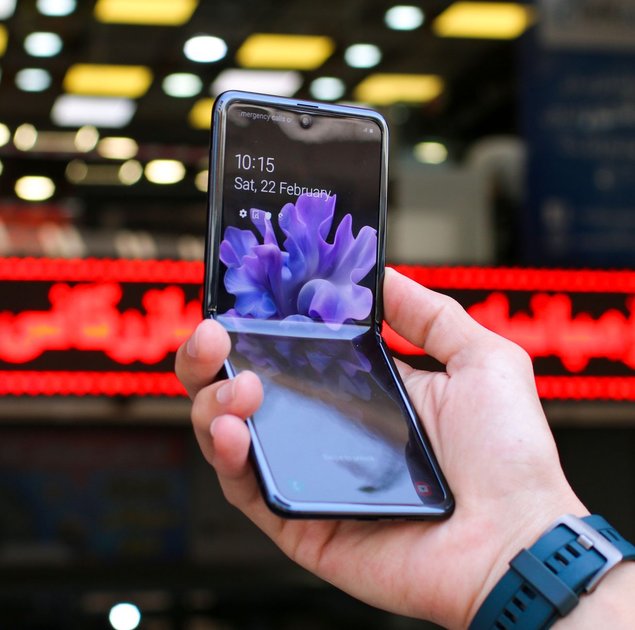
Samsung officially unveiled the Galaxy Z Fold 8 at its Galaxy Unpacked event in Seoul on Saturday, presenting the most significant redesign of its flagship foldable smartphone since the Z Fold 3. The new device is simultaneously thinner, lighter and more durable than its predecessor – a combination of improvements that Samsung has been working toward for two generations and that the Z Fold 8 finally delivers convincingly enough to address the three criticisms that have most consistently limited the foldable category’s mainstream adoption: the devices have been too thick, too fragile and too expensive to justify for most users. The Z Fold 8 addresses all three concerns meaningfully, and the result is the most credible mainstream foldable smartphone that Samsung has produced to date.
The headline specifications tell a story of incremental but meaningful hardware improvement across every measurable dimension. The unfolded display measures 8.0 inches (up from 7.6 on the Z Fold 7), the cover screen is a more usable 6.4 inches (up from 6.2), the total device thickness when folded is 11.1mm (down from 12.1mm on the Z Fold 7), and the weight of 247 grams makes it the lightest phone in the Z Fold series’ history despite the larger screen. The durability improvements are equally significant: Samsung has replaced the Corning Gorilla Glass Victus 2 of previous generations with the new Gorilla Armor 2 material on the cover screen and has upgraded the hinge mechanism to its most tested design ever, rated to 200,000 folds – equivalent to roughly 100 folds per day for five years of use.
Key Specifications at a Glance
- Processor: Snapdragon 8 Elite 2 (4nm TSMC), delivering the fastest sustained performance of any Android processor yet tested.
- Inner Display: 8.0-inch Dynamic AMOLED 2X, 2176 x 1856 resolution, 120Hz adaptive refresh rate, 2,600 nits peak brightness for excellent outdoor visibility.
- Cover Display: 6.4-inch Dynamic AMOLED 2X, 2520 x 1080 resolution, 120Hz, fully usable as a standard smartphone screen without unfolding.
- RAM and Storage: 12GB RAM with 256GB, 512GB or 1TB storage options; no microSD slot.
- Camera System: 200MP main sensor, 12MP ultrawide, 10MP 3x telephoto, 10MP 10x periscope telephoto, 10MP cover selfie camera, 4MP under-display inner camera.
- Battery: 4,400mAh, supporting 65W wired charging, 15W wireless charging and 4.5W reverse wireless charging.
- Durability: IPX9 water resistance rating (improved from IPX8), Armor Aluminium frame, Gorilla Armor 2 cover screen protection.
- Starting Price: $1,699 for the 256GB model (down $100 from the Z Fold 7 at launch).
Where to Buy: The Samsung Galaxy Z Fold 8 is available now. Check the latest price and deals for the Samsung Galaxy Z Fold 8 on Amazon – including storage variants and trade-in offers.
Galaxy AI: The Software Highlight
Samsung’s hardware improvements in the Z Fold 8 are impressive, but the company’s presentation made clear that the software and AI capabilities are being positioned as equally central to the device’s value proposition. Galaxy AI, Samsung’s umbrella brand for its artificial intelligence features, has been significantly expanded for the Z Fold 8 with features that take specific advantage of the large inner display in ways that make the foldable form factor more distinctively useful rather than simply a larger version of a standard smartphone experience.
The most compelling new AI feature is what Samsung calls ‘Flex AI’ – a set of multitasking capabilities that use the Z Fold 8’s large inner display and its distinctive half-open ‘Flex Mode’ position to enable AI-assisted workflows that are genuinely more productive than anything achievable on a standard smartphone. In Flex Mode, with the device half-open like a laptop, the AI system can simultaneously display a document being dictated on the upper half while showing a clean transcript with real-time editing suggestions on the lower half. A meeting recording feature can transcribe, summarise and identify action items from a recorded conversation displayed on the upper half while showing a structured notes interface on the lower half. These multitasking AI features are not available on standard smartphones by definition – they require the physical architecture of a foldable device – and they represent Samsung’s most convincing argument yet for why the premium price of a foldable is justified by genuine capability rather than simply by the novelty of the form factor.
Real-World Performance
In hands-on testing during the Galaxy Unpacked event, the Z Fold 8 delivered on its hardware promises. The cover screen is now genuinely comfortable to use for extended typing and browsing – a usability threshold that the 6.2-inch cover screens of previous Z Fold generations never quite crossed for users with average-sized hands. The transition between cover screen and inner display is faster than on any previous Samsung foldable, with the adaptive refresh rate system smoothly managing the shift without the brief screen blackout that has characterised previous generation foldable transitions. The camera system, led by the 200MP main sensor, produces images that preliminary testing suggests will be among the best on any Android device available this year.
The battery life improvement that the 4,400mAh cell provides over the Z Fold 7’s 4,400mAh – effectively unchanged capacity but better efficiency from the Snapdragon 8 Elite 2 – means that real-world all-day use is achievable in a way that previous foldables struggled with. The 65W wired charging fills the battery from zero to approximately 65% in 30 minutes, which is competitive with the fastest-charging flagships currently available. These are the practical use case improvements that move a device from enthusiast purchase to genuine daily driver consideration for a broader audience.
Competition: Apple’s Foldable and Google Pixel Fold
Samsung’s Galaxy Z Fold 8 faces a competitive environment that has evolved significantly since the company launched the original Z Fold in 2019. Apple’s rumoured foldable iPhone, widely anticipated for a 2027 reveal, has cast a shadow over the foldable market for several years – many potential buyers have indicated in surveys that they are waiting for Apple’s entry into the category before making a foldable purchase. Google’s Pixel 9 Fold, while not matching Samsung’s specifications in most categories, has established a credible alternative for Android users who prioritise software integration and camera quality over the cutting-edge display hardware that Samsung prioritises.
Samsung’s response to the competitive pressure has been to accelerate the pace of hardware improvement while simultaneously reducing price – the $1,699 starting price for the Z Fold 8 represents a $100 reduction from the Z Fold 7 and a $300 reduction from the Z Fold 6. The company has also expanded its trade-in programme significantly, with aggressive trade-in values for previous-generation Galaxy devices that can bring the effective out-of-pocket cost to under $1,000 for existing Galaxy ecosystem customers.
Should You Buy the Samsung Galaxy Z Fold 8?
The Galaxy Z Fold 8 is the right foldable for users who want the best available foldable hardware today, who value Samsung’s extensive software ecosystem, and who can afford the $1,699 starting price without finding it prohibitive. The device has genuinely crossed into mainstream usability territory in ways that previous Z Fold generations had not – it is thin enough to carry comfortably, durable enough to use without anxiety, and capable enough in both screen modes to function as a primary device rather than a secondary novelty. The Galaxy AI features are the most compelling software differentiation argument for the foldable form factor that Samsung has yet produced, and they will improve over the device’s lifetime as Samsung updates the underlying AI models.
For users who are undecided between the Z Fold 8 and a standard flagship smartphone at $800-$1,000, the decision ultimately comes down to whether the large inner display and multitasking capabilities justify the premium and the additional thickness that even the thinner Z Fold 8 carries relative to a standard device. For productivity-focused users, frequent travellers who watch content on the go, and anyone who currently uses a tablet alongside a smartphone, the Z Fold 8’s value proposition is compelling. For users who primarily use their phone for communication and social media consumption, the standard Galaxy S26 Ultra at $1,299 will be a better fit. The Z Fold 8 goes on sale July 10 and pre-orders open today with a $200 Samsung Credit bonus for early buyers.

Trust Post Desk
A journalist and editor at TrustPost.org covering world and national news, technology updates and human-interest stories. They check every fact, interview sources in person or online, and aim to deliver clear, accurate reporting. Their work ranges from breaking news to in-depth features and daily newsletters. Outside the newsroom, they follow emerging trends and engage with readers on social media.