Luxury watchmakers are aggressively pivoting their sponsorship strategies, moving away from the saturated landscapes of established prestige sports like Formula 1, tennis, and traditional football. This strategic reset sees brands competing fiercely for early positions in emerging disciplines, aiming to conquer new markets and shape brand association as audience structures are still forming.
In This Article
This shift is a direct response to a changing luxury market where heritage and craftsmanship alone no longer guarantee commercial relevance. Instead, visibility, attention, and social influence have become paramount for survival, especially for brands outside the industry’s top tier.
The numbers underscore this urgency: Swiss watch exports declined by 2.8 percent in 2024 to CHF 26 billion, followed by another 1.7 percent drop in 2025 to CHF 25.6 billion, according to the Federation of the Swiss Watch Industry. This broad slowdown in demand outside a few top segments has forced a recalibration, pushing watchmakers into diverse sports from padel to sumo wrestling and IRONMAN triathlon.
Rado and Audemars Piguet Secure Early Positions in Rapidly Growing Sports
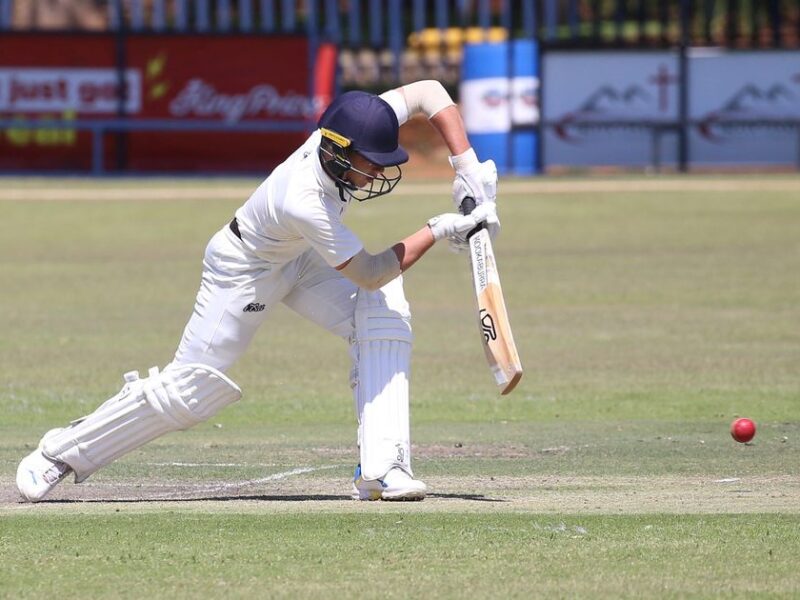
The pursuit of first-entry positioning is a defining characteristic of this new strategy, allowing brands to embed themselves before commercial saturation. Rado exemplifies this by partnering with European Cricket, becoming its official timekeeper since 2025.
This move places Rado within one of the fastest-growing efforts to professionalise cricket across non-traditional European markets. Rather than aligning with established cricket economies like India or Australia, European Cricket offers access to a developing audience base where league structures and media rights are still evolving.
Rado’s role extends beyond mere branding; timekeeping functions are integrated directly into match presentations, marking key phases from the first ball to decisive moments. The brand also leverages digital amplification through social media content and features like the “Perfectly Timed Play of the Match.”
Athlete association further reinforces Rado’s narrative, working with cricket ambassadors such as fast bowler Kagiso Rabada, known for speeds exceeding 150 km/h and over 300 Test wickets, and Australian all-rounder Cameron Green, a key figure in international formats including the IPL and ODI World Cup-winning campaigns.
Similarly, Audemars Piguet has made a deliberate shift into padel, a commercially scalable racket sport experiencing rapid expansion across Spain, the Middle East, Europe, and Asia. Their entry via the Qatar Airways Premier Padel Tour and a partnership with World No.1 Agustín Tapia signals a focus on fast-growing, participation-led sports.
Padel’s dual-layer ecosystem, combining elite visibility through the Premier Padel Tour with mass participation at the club level, is highly appealing. Audemars Piguet serves as the Official Timekeeper, embedding itself into this emerging competitive infrastructure at an early stage of global consolidation.
The brand is also extending its presence through Pro-Am formats and club partnerships across multiple continents. This hybrid engagement model combines elite sporting visibility with direct client interaction in recreational environments, aligning with the sport’s appeal to younger, urban audiences through its fast, adaptive play style.
TUDOR and Bell & Ross Embrace Cultural Legitimacy and Extreme Endurance
Beyond sheer growth, some watchmakers are seeking deep cultural resonance and functional writing. TUDOR’s partnership with the Japan Sumo Association positions the brand within Japan’s national sport, sumo wrestling, and its culturally protected, multi-generational audience.
The Japan Sumo Association governs a 1,500-year-old tradition, overseeing six Grand Sumo tournaments annually, totaling 90 days of competition. While deeply rooted domestically, sumo is also undergoing controlled international expansion, with tournaments staged in London in 2025 and a scheduled return to Paris in 2026.
This creates a unique commercial profile, offering deep cultural legitimacy in Japan – one of the most important luxury watch markets globally – and international visibility through sanctioned global events. Entry into sumo functions as cultural permissioning, placing TUDOR within an institution that already carries authority.
TUDOR aligns its focus on consistency and long-cycle performance with sumo’s intensely disciplined system, where rikishi (wrestlers) build their physiques through years of controlled conditioning. The robust 43mm Black Bay 68 is positioned within this context, its scale and durability framed against the physical presence of sumo arenas and athletes.
Meanwhile, Bell & Ross has plunged into the demanding world of rally-raid racing through its partnership with Defender Rally, competing in the World Rally-Raid Championship (W2RC). This move places the brand inside one of the most extreme environments in global motorsport, anchored by the Dakar Rally, which opened the 2026 championship season in January.
Rally-raid offers a distinct commercial profile from the high-visibility circuits of Formula 1, operating through long-duration endurance stages in remote environments. This creates a focused association between the brand and performance conditions, particularly for manufacturers positioning themselves around tool-watch functionality.
Bell & Ross, historically focused on professional instruments for extreme environments, equips the Defender Rally team with the BR-X3 Black Titanium. This COSC-certified manufacture timepiece is constructed in grade 2 titanium, designed for legibility and durability under impact, reinforcing the brand’s commitment to robust performance in challenging conditions. The shift away from saturated urban motorsport properties towards endurance-based racing offers clearer functional writing and less crowded partnership landscapes.
NORQAIN and Breitling Leverage League-Wide Exposure and Participatory Engagement
For some brands, the strategic reset involves tapping into commercially developed team sports ecosystems for continuous, scalable exposure. NORQAIN’s partnership with the National Hockey League (NHL) exemplifies this, leveraging the league’s 32 teams, North American core audience, and global broadcast distribution.
Unlike event-based sponsorships, league partnerships operate continuously across a full season calendar, providing recurring exposure through games, playoffs, stadium activations, and broadcast integrations. This model offers market penetration through a league-wide commercial framework, including licensing rights across team logos, retail activation, and digital content.
NORQAIN’s agreement includes full international licensing rights across the United States, Canada, and Europe. The brand’s visibility scales in parallel with the NHL’s seasonal narrative, distributed through a dense broadcast network. This creates continuous exposure rather than isolated event peaks, offering accelerated visibility for independent brands.
The Adventure Chrono 41mm NHL Limited Edition translates this partnership into product form, featuring a textured “scratched ice” dial and a 9 o’clock subdial styled as a face-off circle with rotating hockey sticks. With production tied to the NHL’s founding year (1917 units), the watch leverages historical reference within a high-volume entertainment ecosystem.
Breitling, meanwhile, continues its partnership with IRONMAN, positioning itself within one of the most physically demanding global sporting formats: long-duration triathlon racing. This partnership centers on the IRONMAN World Championship races in Nice, France, and Kailua-Kona, Hawaii, alongside the IRONMAN 70.3 World Championship in Marbella, Spain.
These races represent the culmination of multi-year training cycles, making IRONMAN a clear example of structured endurance sport at a global scale. For watchmakers, IRONMAN offers a distinct commercial profile where the audience is highly participatory, with brand engagement built through personal performance, timing discipline, and measurable physical output.
Breitling, the official luxury watch partner of IRONMAN since 2021, has embedded itself within this performance ecosystem, associating with elite athletes like Lucy Charles-Barclay and Sam Laidlow. This creates a direct link between product function and athlete behavior, particularly for performance-oriented tool watches.
The partnership is expressed through limited-edition models like the Endurance Pro IRONMAN World Championship 2025 edition and the Endurance Pro IRONMAN 70.3 World Championship 2025 edition. These watches feature lightweight construction, thermocompensated COSC-certified SuperQuartz chronograph movements, and sport-specific functionality, with distribution tied directly to event geography in Nice, Kona, and Marbella.
The Broader Implications of Watchmaking’s Sports Realignment
This widespread strategic reset by luxury watchmakers is more than just a shift in marketing spend; it reflects a fundamental realignment within the industry itself. The traditional pillars of heritage and craftsmanship, while still valued, are no longer sufficient to guarantee commercial relevance in a market increasingly driven by digital exposure and microsecond consumer attention spans.
The pressure on the middle tier of Swiss watchmaking is particularly acute. Brands with genuine manufacture heritage, such as Jaeger-LeCoultre and Blancpain, possess strong DNA but must now balance the expectations of devoted collectors with the broader luxury consumer who demands clarity, narrative coherence, and high social-media visibility. This struggle highlights why a new approach to market penetration, like those seen in emerging sports, is vital for sustained growth and survival.
The industry’s pivot towards sports like padel, European cricket, and rally-raid also signifies a move to diversify geographical reach. While the United States remains a crucial export destination, India is rapidly expanding its luxury market, with watch exports increasing by 25.2 percent in 2024 and a further 8.9 percent in 2025. Targeting sports with developing international footprints allows brands to tap into these new growth engines, mitigating reliance on traditionally strong but sometimes volatile markets like China.

Trust Post Desk
A journalist and editor at TrustPost.org covering world and national news, technology updates and human-interest stories. They check every fact, interview sources in person or online, and aim to deliver clear, accurate reporting. Their work ranges from breaking news to in-depth features and daily newsletters. Outside the newsroom, they follow emerging trends and engage with readers on social media.