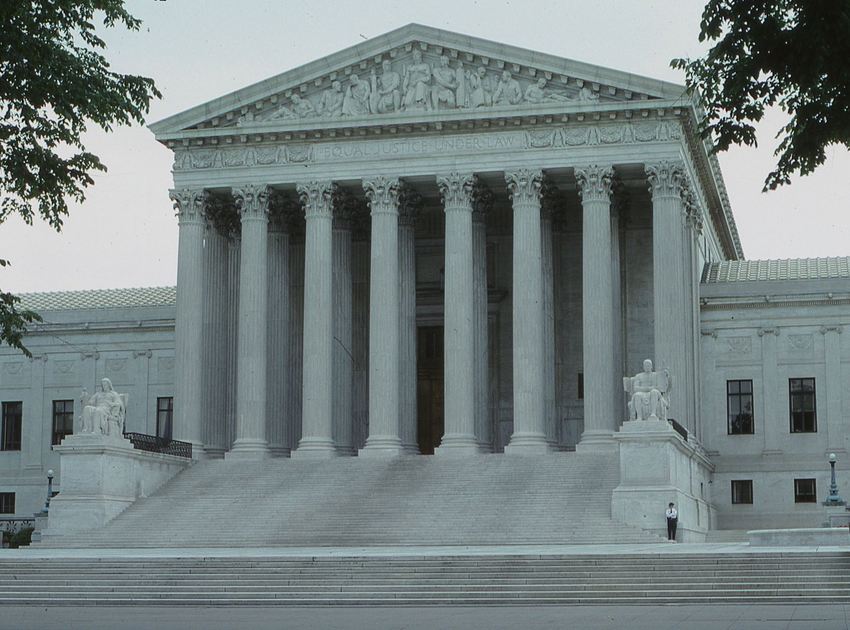
The United States Supreme Court issued its most consequential ruling on digital rights in more than a decade on Friday morning, striking down state laws requiring social media platforms to verify the ages of their users as unconstitutional violations of the First Amendment. The 6-3 decision, written by Justice Amy Coney Barrett and joined by Chief Justice Roberts and Justices Alito, Gorsuch, Kavanaugh and Jackson, held that age verification requirements impose an unconstitutional burden on the speech rights of adults who would be required to provide identity documentation to access constitutionally protected online expression. The ruling invalidates similar laws that had been passed or were pending in 23 states, and forces a fundamental reconsideration of the legislative approach that state governments have pursued to address the documented harms of social media on adolescent mental health.
The case, which consolidated challenges to laws from Texas, Arkansas and Florida, had been closely watched as a test of how far states could go in regulating access to social media platforms without running afoul of the First Amendment protections that the court has consistently extended to digital speech. The platforms – including Meta, TikTok, Snap and ByteDance – had argued that age verification requirements would effectively create a mandatory identity database of internet users and would deter adults from accessing platforms out of concern about their personal information being collected and potentially breached. Consumer advocacy groups and civil liberties organisations including the ACLU joined the platforms in opposing the laws, while children’s safety advocates and the state governments that passed the laws argued that protecting minors from demonstrable mental health harms justified the regulatory burden.
What the Court Held
Justice Barrett’s majority opinion drew heavily on the precedent established in Ashcroft v. ACLU (2004), in which the court struck down the Child Online Protection Act on similar grounds. The majority found that the states had not demonstrated that age verification was the least restrictive means of achieving their stated goal of protecting minors from harmful content – the constitutional standard that must be met when a law burdens speech protected by the First Amendment.
- The court found that parental controls, platform-level content moderation and existing federal laws like COPPA (the Children’s Online Privacy Protection Act) represent less restrictive alternatives that states had not adequately demonstrated were insufficient before imposing the more burdensome age verification requirement.
- The majority opinion specifically noted that age verification systems would require platforms to collect, store and verify government-issued identity documents – creating new privacy risks for adults that the First Amendment does not permit government to impose on speech access.
- The court declined to address the separate question of whether social media platforms can be held liable for algorithmic harms to minors, leaving that question for future cases.
- Justices Sotomayor, Kagan and Thomas dissented. Sotomayor’s dissent argued that the court was giving insufficient weight to documented evidence of mental health harms and was prioritising corporate speech interests over children’s wellbeing.
- The ruling does not affect the federal Children’s Online Privacy Protection Act (COPPA) or pending federal legislation, only state-level age verification mandates.
Reactions and Next Steps
The ruling drew immediate and sharply divided reactions from across the political spectrum. Technology industry groups praised the decision as a vindication of free speech principles and a necessary check on state legislative overreach in internet regulation. “Today’s ruling protects the speech rights of every American who uses the internet,” said the Computer and Communications Industry Association in a statement released within minutes of the opinion’s publication. The platforms themselves were more measured in their public response, aware of the political sensitivity of appearing to celebrate a decision that many parents and children’s advocates view as a setback for child safety.
State legislators who had championed the age verification laws were uniformly critical. Texas Attorney General Ken Paxton called the ruling “a gift to Big Tech and a betrayal of every parent who is watching social media damage their children,” and indicated that Texas would pursue alternative legislative approaches designed to survive First Amendment scrutiny. Several legal experts suggested that states may attempt to achieve similar ends through different means – for example, by placing the verification obligation on app stores rather than platforms directly, or by focusing on algorithmic design requirements rather than age gating.
The Federal Path Forward
The Supreme Court‘s ruling has intensified pressure on the United States Congress to pass federal legislation addressing social media’s effects on minors through mechanisms that can survive First Amendment review. Several bipartisan bills have been working their way through Congress that focus not on age verification but on algorithmic transparency requirements, design standards restricting addictive features and enhanced data protection requirements for users under 18. Legal experts suggested Friday that these approaches – targeting platform design rather than user access – may offer a more constitutionally durable path to protecting young users than the age gate model the court has now twice struck down.
The mental health research underlying the legislative push is not in dispute: multiple peer-reviewed studies published over the past several years have documented associations between heavy social media use in adolescence and increased rates of anxiety, depression and body image disorders, particularly among teenage girls. What the court has said is that the proposed remedy – mandatory age verification – is constitutionally impermissible as a means of addressing those documented harms. Finding constitutionally acceptable alternatives that genuinely protect young users will be the challenge that legislatures and child safety advocates must now address.
Friday’s ruling will be studied and debated by First Amendment scholars and digital rights advocates for decades. Whether it ultimately represents a principled protection of free expression or a prioritisation of corporate interests over child safety will depend significantly on what Congress does next – and how seriously the platforms themselves take their responsibility to protect the young users who make up a significant portion of their audiences.
The Mental Health Research That Motivated the Laws
The legislative push for social media age verification laws did not arise in a vacuum – it was driven by a growing body of research linking heavy adolescent social media use to negative mental health outcomes, and by a series of high-profile congressional hearings in which parents of young people who had experienced mental health crises, eating disorders or suicidal ideation gave testimony directly attributing those outcomes to social media exposure. The emotional weight of that testimony, combined with internal documents from major platforms that suggested their own researchers had identified harmful effects on certain user populations but that the platforms had not acted on those findings, created the political momentum for state legislation that moved faster than the more complex federal legislative process could accommodate.
The research base on social media and adolescent mental health is real and concerning, even if its interpretation is contested. Meta-analyses published in peer-reviewed journals have documented associations between heavy social media use and increased rates of anxiety, depression and body dissatisfaction among teenage girls in particular. The causal mechanism most commonly proposed is a combination of social comparison – comparing one’s own life, appearance and social experiences to the curated presentations of others – and the addictive engagement design of social media platforms, which uses variable reinforcement schedules to maximise the time users spend on the platform regardless of whether that time is enjoyable or beneficial. Not all researchers agree that the associations establish causation, and some studies have found minimal or no effects, creating a body of evidence that is large enough to generate concern but contested enough to complicate simple legislative responses.
State Legislative Alternatives Going Forward
With the Supreme Court’s ruling closing off the age verification approach, state legislators and child safety advocates are actively exploring alternative regulatory frameworks that might achieve similar protective outcomes without triggering the First Amendment barriers the court identified. The most discussed alternatives focus on platform design rather than user access – requiring platforms to offer opt-out versions of algorithmic recommendation, prohibiting specific engagement-maximising design features during hours when minors are most likely to be online, mandating notification systems that alert users and parents when usage exceeds defined thresholds, and requiring transparent disclosure of how recommendation algorithms function for users under 18.
Legal experts are divided about which of these approaches would survive First Amendment challenge. Laws focused on algorithmic design are more likely to be characterised as regulations of commercial conduct rather than speech, making them subject to a less demanding constitutional standard. But several First Amendment scholars have warned that the line between regulating an algorithm’s behaviour and regulating the speech the algorithm surfaces is not as clear as proponents of the design regulation approach sometimes suggest, and that creative platform lawyering could find constitutional vulnerabilities in design requirements that appear more durable at first glance. The legislative and legal debate will continue for years, and the Supreme Court’s Friday ruling represents a pivot point rather than a conclusion to the broader effort to establish meaningful governmental oversight of social media’s effects on young users.

Trust Post Desk
A journalist and editor at TrustPost.org covering world and national news, technology updates and human-interest stories. They check every fact, interview sources in person or online, and aim to deliver clear, accurate reporting. Their work ranges from breaking news to in-depth features and daily newsletters. Outside the newsroom, they follow emerging trends and engage with readers on social media.