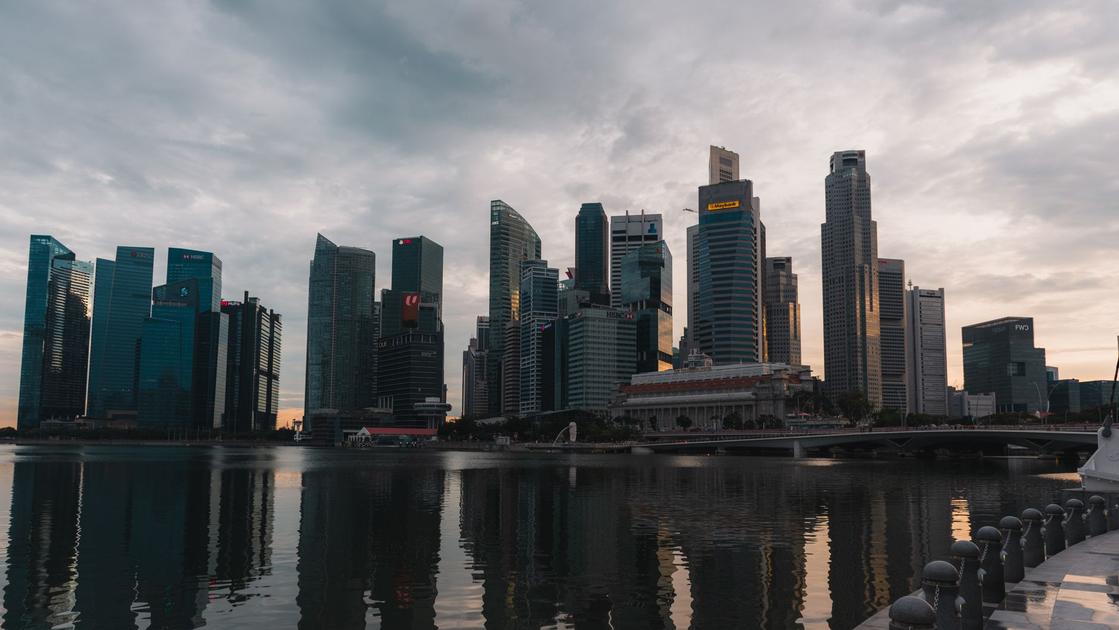
The Shangri-La Dialogue 2026, the premier security forum for the Asia-Pacific region convened annually in Singapore by the International Institute for Strategic Studies, brought together defense ministers, military chiefs, and senior national security officials from across the Indo-Pacific to address a regional security environment that is arguably more complex and contested than at any point since the Cold War. Indo-Pacific nations represented at the dialogue reaffirmed their collective support for a rules-based international order, a formulation that has become the central organizing principle for the security architectures of the United States, its treaty allies, and most ASEAN member states as they navigate competing pressures from the intensifying US-China strategic competition. Vietnam, notably, pursued what observers described as a quiet strategy at the dialogue – attending substantively but avoiding public statements that could be read as aligning too clearly with either Washington or Beijing, a balancing act that reflects Hanoi’s consistent foreign policy posture of maintaining equidistance from the major powers while deepening economic ties with both.
The 2026 dialogue took place against a backdrop of several developments that shaped the discussions: the ongoing fallout from the Iran-US conflict and its effects on energy supply chains critical to Southeast Asia; the Pentagon’s designation of 188 Chinese companies including major technology and industrial firms on its military entity list; and India’s accelerating development of a major military complex on Great Nicobar Island near the Strait of Malacca – a project that alters the strategic geography of the region in ways both welcomed and viewed with ambivalence by Southeast Asian capitals.
ASEAN’s Difficult Balancing Act
ASEAN’s collective security posture in 2026 reflects the inherent difficulty of a ten-member regional bloc whose members have vastly different relationships with both the United States and China. The Philippines, which has a mutual defense treaty with the United States and has been engaged in increasingly assertive confrontations with Chinese coast guard and naval vessels in the South China Sea, brings a perspective of existential concern about Chinese maritime expansion that shapes its approach to the dialogue and to ASEAN deliberations. Singapore, as host of the Shangri-La Dialogue and one of the region’s most sophisticated diplomatic actors, consistently works to ensure that the forum remains a platform for genuine dialogue rather than a venue for bloc politics. Indonesia, the region’s largest economy and population, maintains its traditional non-aligned posture even as its maritime interests in the South China Sea put it in periodic tension with Chinese claims. Thailand, Myanmar, Cambodia, and Laos bring their own complex relationships with Beijing that differ substantially from the Philippines’ or Vietnam’s calculus. The India Great Nicobar project sits in the background of these deliberations as an example of how a non-ASEAN actor’s strategic investments can reshape the region’s security architecture without ASEAN having any formal say in the decisions.
The South China Sea: Unchanged Tensions in a Changed Context
The South China Sea disputes that have been a perennial focus of the Shangri-La Dialogue remain unresolved and active in 2026, with no signs of the kind of negotiated framework that would reduce the near-daily friction between Chinese coast guard vessels and the vessels of claimant states including the Philippines, Vietnam, Malaysia, and Brunei. China maintains its position that its historical claims to virtually the entire South China Sea supersede the maritime rights of other coastal states under the UN Convention on the Law of the Sea, a legal position that an international arbitral tribunal rejected in 2016 and that no claimant state has accepted. In practice, Chinese coast guard operations have continued to challenge Philippine resupply missions to the BRP Sierra Madre stationed at Second Thomas Shoal, and similar friction points have continued in Vietnamese and Malaysian waters. The rules-based order language reaffirmed at the Shangri-La Dialogue is in significant part a response to these ongoing South China Sea developments, as ASEAN states try to reinforce the international legal framework that limits China’s claims without directly confronting Beijing in ways their economic dependencies make costly. The broader pattern of international legal frameworks being tested and contested in 2026 extends from the South China Sea to Voting Rights Act jurisprudence – everywhere, the question is who gets to define the rules that govern collective life.
Defense Spending Trends Across Southeast Asia
One concrete output of the elevated security concerns in the Indo-Pacific is a multi-year trend of increased defense spending across Southeast Asian nations that was visible in the procurement announcements and capability discussions at the Shangri-La Dialogue 2026. The Philippines has significantly accelerated its military modernization program, with new acquisitions from the United States, South Korea, and European suppliers aimed at improving maritime patrol, air defense, and island-based deterrence. Vietnam has expanded its submarine fleet and coastal defense capabilities. Indonesia, Malaysia, and Singapore have all announced multi-year defense budget increases. The collective effect is a region that is investing more in its own security architecture than at any point in the post-Cold War period, reflecting both the direct security concerns raised by China’s maritime expansion and the broader uncertainty created by a US foreign policy that has oscillated between strong regional commitment and skepticism about alliance obligations over the past decade.

Trust Post Desk
A journalist and editor at TrustPost.org covering world and national news, technology updates and human-interest stories. They check every fact, interview sources in person or online, and aim to deliver clear, accurate reporting. Their work ranges from breaking news to in-depth features and daily newsletters. Outside the newsroom, they follow emerging trends and engage with readers on social media.