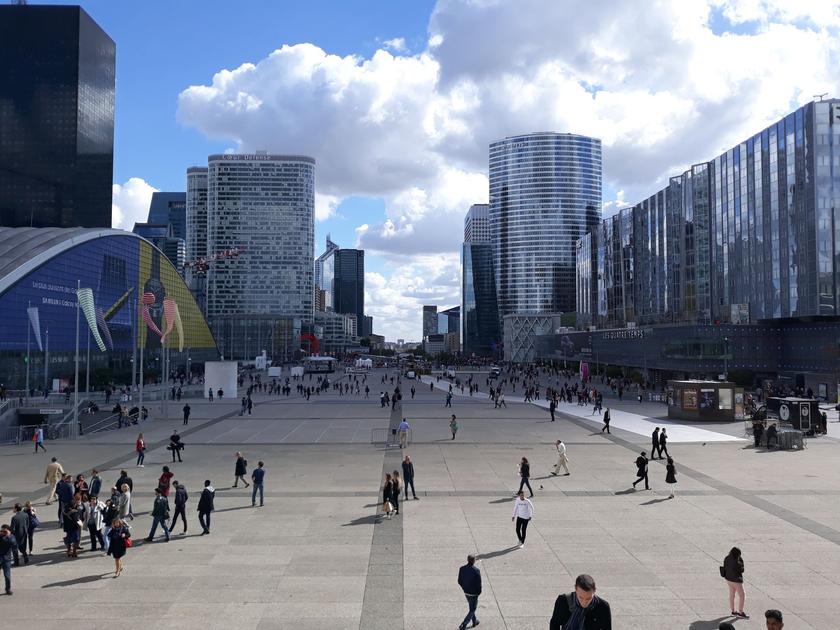
France’s economy recorded zero growth in the first quarter of 2026, with GDP stagnating at 0.0 percent quarter-on-quarter after the 0.2 percent expansion achieved in the fourth quarter of 2025, according to data published by the national statistics institute INSEE. The stagnation reflected a broad-based weakness across multiple components of economic activity: private consumption fell as French households responded to lingering inflation and uncertainty about the energy price outlook in the context of the Iran conflict; private investment contracted as businesses deferred capital expenditure decisions pending greater clarity about the global demand environment; and exports weakened as France’s major trading partners in southern Europe and the wider EU experienced their own economic difficulties. The 0.0 percent reading placed France among the weaker performers in the European Union in Q1 2026, in contrast with some smaller European economies that maintained positive momentum despite the challenging external environment.
The context for France’s Q1 economic stagnation includes both domestic and international factors. Domestically, France entered 2026 with its political landscape in a state of fragility: the coalition government that emerged from the 2024 legislative elections has faced persistent challenges in achieving the parliamentary majorities necessary to pass major economic legislation, creating policy uncertainty that has suppressed business confidence and investment. President Macron’s ability to advance domestic economic reform has been constrained by the minority parliamentary situation, limiting his government’s capacity to implement the structural reforms – pension adjustment, labor market flexibility, and public sector efficiency improvements – that France’s medium-term fiscal position requires. The public sector deficit, which the French government has been committed to reducing in compliance with EU fiscal rules, showed only limited improvement in 2025, and the 2026 target of reducing the deficit to below 5 percent of GDP faces risks from the lower-than-expected growth of Q1. France’s defense budget increase to €68.5 billion in 2026 – representing 2.25 percent of GDP and reflecting France’s NATO commitments – added to public expenditure even as other parts of the budget faced pressure.
Iran War Energy Shock and French Economic Impact
The Strait of Hormuz disruption that followed the February 28 US-Israeli strikes on Iran delivered a meaningful additional shock to the French economy through elevated energy prices. France’s electricity generation mix is dominated by nuclear power – the country operates 56 nuclear reactors and typically generates approximately 70 percent of its electricity from nuclear – which insulates French consumers from natural gas price volatility to a greater degree than Germany or Italy. However, France is a significant importer of petroleum products for transportation, and the elevation of crude oil prices caused by the Hormuz disruption contributed to renewed transportation fuel cost increases that affected consumer spending, logistics costs, and industrial energy bills for French companies that use petroleum-derived energy directly. The UK’s similar experience of economic contraction in April 2026 due to the energy shock illustrates how the Middle East conflict transmitted through energy markets to affect Western European economies well beyond the direct parties to the Iran conflict. France’s economic stagnation in Q1 preceded the most severe energy market impact of the Hormuz closure – which intensified through March and April – suggesting that the Q2 2026 data may show further weakness before the June 14 ceasefire effects work their way through to lower energy prices and improved consumer confidence.

Trust Post Desk
A journalist and editor at TrustPost.org covering world and national news, technology updates and human-interest stories. They check every fact, interview sources in person or online, and aim to deliver clear, accurate reporting. Their work ranges from breaking news to in-depth features and daily newsletters. Outside the newsroom, they follow emerging trends and engage with readers on social media.