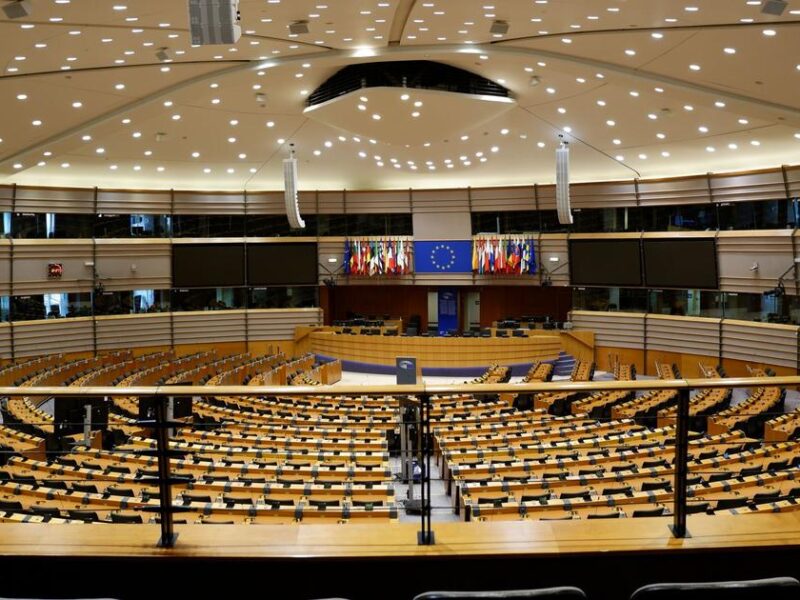
The 52nd G7 Leaders’ Summit convened in Evian-les-Bains, a spa resort town on the south shore of Lake Geneva in the French Alps, from June 15 to 17, 2026, bringing together the heads of government of the United States, United Kingdom, France, Germany, Italy, Japan, and Canada alongside European Union leadership and several invited outreach partners including Indian Prime Minister Narendra Modi and Ukrainian President Volodymyr Zelensky. French President Emmanuel Macron, who holds the G7 presidency for 2026, organized the summit around a packed agenda that reflected the convergence of multiple global crises: the US-Iran conflict that had disrupted energy markets for 15 weeks before the June 14 ceasefire MOU announcement; the ongoing Russia-Ukraine war now in its fifth year; the governance challenges posed by rapidly advancing artificial intelligence; and structural macroeconomic imbalances that the G7 nations have struggled to address through coordinated policy since the global financial crisis of 2008-2009. The summit’s setting in Evian – a town that derives its international identity primarily from the mineral water bearing its name and from the 2003 G8 summit hosted there by President Jacques Chirac – provided an intimate and historically resonant venue for what proved to be one of the most substantively significant G7 gatherings in recent years.
The immediate backdrop to the Evian summit was dominated by the June 14 announcement of the US-Iran memorandum of understanding, which Trump described in his pre-summit communications as one of the greatest diplomatic achievements of his presidency. The announcement, which came less than 24 hours before the G7’s opening session, meant that leaders arrived at Evian needing to rapidly absorb and assess the terms of an agreement that none of them had been formally consulted on in advance – a dynamic that generated private irritation among European leaders even as they publicly welcomed the end of the Iran conflict. The UK, France, and Germany had their own historical stakes in the Iran nuclear framework dating to the 2015 JCPOA and the European “E3” format of Iran engagement that had been a cornerstone of European diplomatic strategy, and the unilateral American approach to the June 14 MOU repeated the pattern they had complained about when Trump withdrew from the JCPOA in 2018. The MOU’s nuclear provisions – maintaining the status quo rather than reducing enrichment – were particularly concerning to Paris and Berlin.
The Four Pillars of the Evian Agenda
Beyond the Iran deal scrutiny, the Evian summit addressed three other major agenda areas that Macron had worked to advance as core G7 priorities for France’s presidency year. On Ukraine, the summit’s communique reaffirmed G7 support for Ukraine’s sovereignty and territorial integrity, endorsed a new package of coordinated financial assistance for Kyiv’s 2026 defense and reconstruction needs, and tasked finance ministers with accelerating the use of Russian sovereign asset profits as a vehicle for Ukraine support without formally confiscating the principal – a legal distinction that had divided the G7 in previous years but appeared to be moving toward a consensus framework. On AI governance, the summit produced a Evian Principles on Trustworthy AI that built on the 2025 Paris AI Action Summit outcomes and established a voluntary framework for protecting children from harmful AI-generated content, a priority for France, Canada, and the UK that reflected growing political pressure in all three countries from parents, educators, and health researchers documenting AI’s harmful effects on youth mental health. On macroeconomic imbalances, the summit communique addressed concerns about industrial overcapacity – primarily a reference to Chinese manufacturing subsidies and their trade-distorting effects – and committed members to a coordinated review of trade defense measures, though reaching agreement on specific coordinated action against Chinese overcapacity proved beyond what the summit could achieve in two days.

Trust Post Desk
A journalist and editor at TrustPost.org covering world and national news, technology updates and human-interest stories. They check every fact, interview sources in person or online, and aim to deliver clear, accurate reporting. Their work ranges from breaking news to in-depth features and daily newsletters. Outside the newsroom, they follow emerging trends and engage with readers on social media.